
Views have no direct equivalent
Drupal Views are a query-builder UI; WordPress has no drop-in twin. Each important View is rebuilt deliberately — as an archive, a block, or a query — which is design work, not conversion work.
Migration · Drupal → WordPress
Drupal is powerful and expensive to live with: developer scarcity, upgrade cliffs between major versions, and editorial workflows only a developer can love. WordPress covers the same ground with a far larger ecosystem and editors your team will actually enjoy. The craft is translating Drupal’s structures — not flattening them.
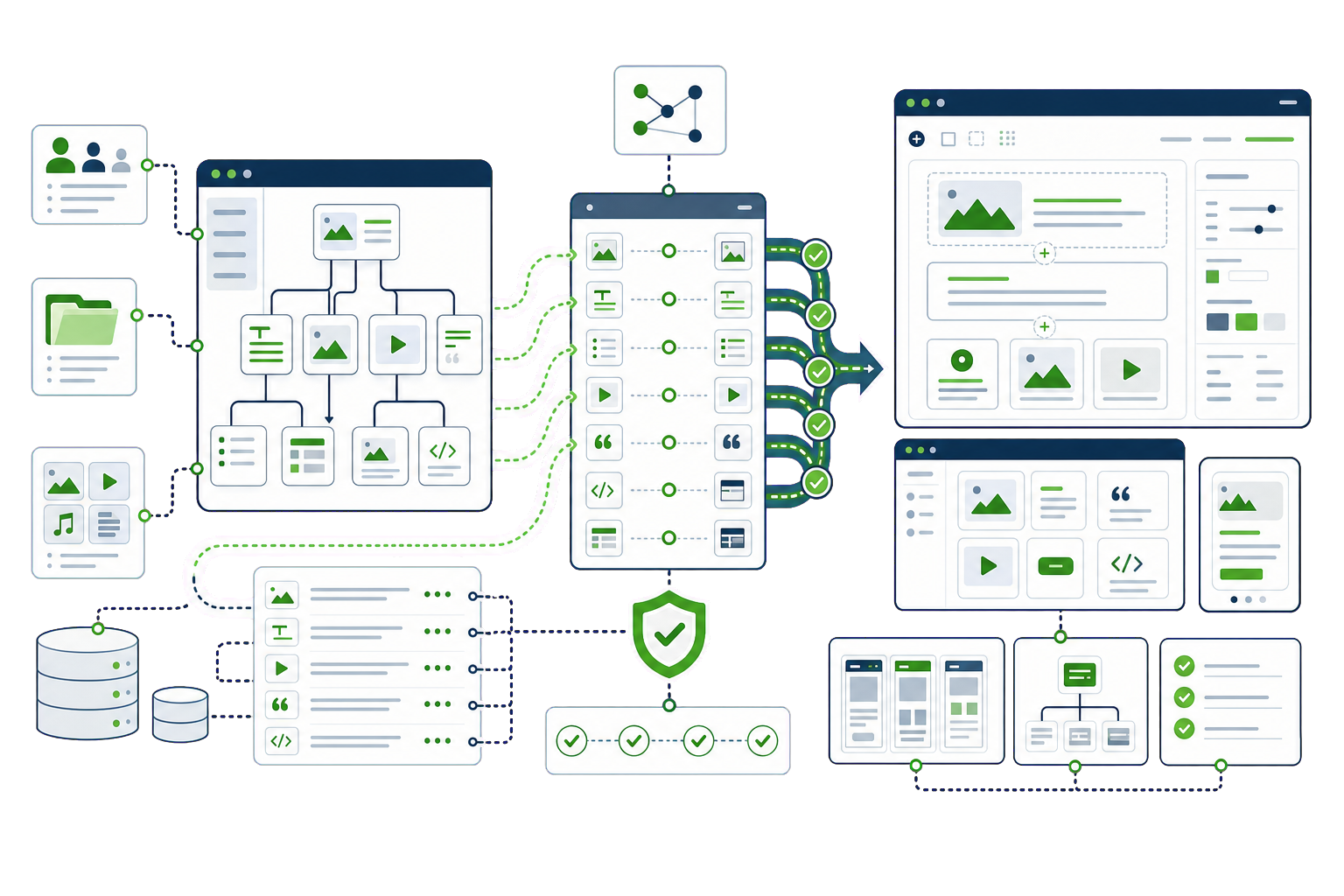
Why switch
Major Drupal upgrades are effectively re-platforming projects. WordPress upgrades are routine maintenance.
Drupal talent is rarer and pricier every year. The WordPress talent pool is the largest in the CMS world.
Teams under-publish because editing Drupal is a chore. The block editor removes the excuse.
Modules lag, patches pile up, and the maintenance bill grows even when the site does not change.
What moves
The Drupal specifics
Every platform has traps that generic migration checklists miss. These are the Drupal-specific ones — the difference between a clean move and a rescue job.
Drupal Views are a query-builder UI; WordPress has no drop-in twin. Each important View is rebuilt deliberately — as an archive, a block, or a query — which is design work, not conversion work.
A Drupal site can have dozens of content types with dozens of fields each. The mapping document (what becomes a CPT, what becomes meta, what gets merged) is where migrations succeed or fail.
Drupal’s core multilingual maps to WPML or Polylang — similar capability, different model. The translation structure must be decided before content moves, not after.
Years of Pathauto rules mean one node can have several live URLs. The redirect inventory has to come from the database, not from clicking around the site.
Custom Drupal modules are PHP against Drupal APIs. Each one is re-scoped: a WordPress plugin equivalent, a rebuild, or retirement.
Process
Every migration is a parallel build: your Drupal site keeps running while the new WordPress site is built and verified beside it. The switch is a planned window, not a leap.
Questions
If your situation isn't covered here, send us the details and we'll reply with a straight answer.
Yes — that is the core of the job. Content types become custom post types, fields map to structured meta, and taxonomies carry over with their hierarchies. The structure is preserved deliberately through a mapping document we agree before anything moves, not flattened into generic pages.
They are rebuilt, not converted — WordPress has no direct Views equivalent. Each listing or feed your site relies on is recreated as an archive template, a query, or a block. In practice most sites use a fraction of the Views they have accumulated, so this is also a healthy pruning.
Users, roles and content authorship move. Passwords do not — the hashing schemes differ — so accounts are migrated with a secure reset flow at launch. For sites with many contributors we stage the comms so nobody is surprised.
No — it is the usual case. We migrate from end-of-life Drupal versions regularly; content comes from the database, not from the admin UI, so the age of the install matters far less than the quality of the mapping.