
Your hours, kept
Working overlap with US Eastern through Pacific time for calls, reviews and launch windows. Urgent work runs on your clock, not ours.
Markets we serve
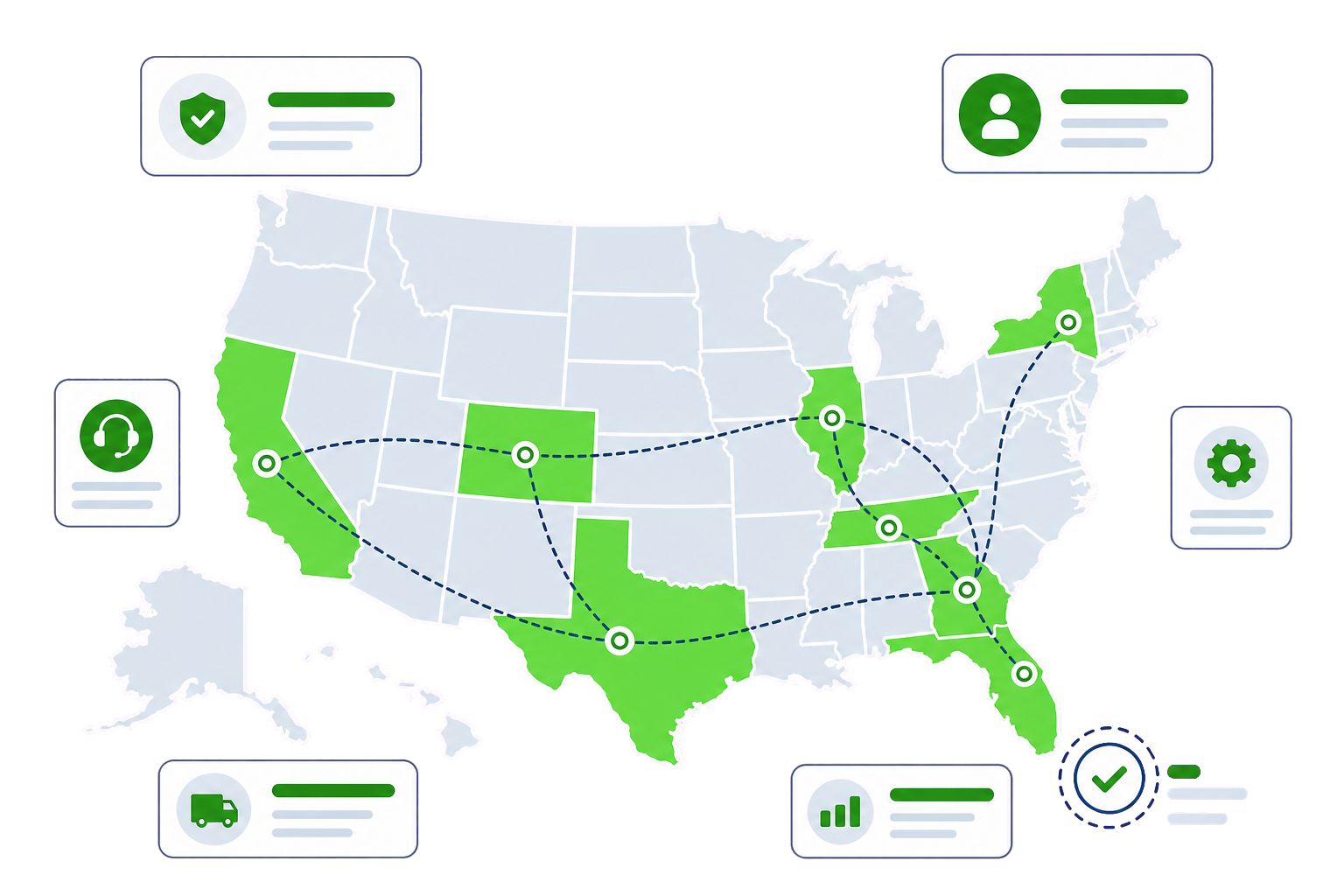
Most of our client demand comes from a handful of US markets, and each one buys differently — New York's compliance stakes are not Austin's growth sprint. These pages cover how we serve each market specifically. No pretend local offices; senior WordPress engineering, working overlap with your time zone, and results you can verify. Most of our WordPress development USA work runs remote-first, across timezones, with the same engineers throughout.
Our markets
Each market page covers the industries we serve there, how the remote model works in your time zone, and the questions businesses in that market actually ask.
New York City, Brooklyn, Long Island, Buffalo, Albany.
Austin, Dallas–Fort Worth, Houston, San Antonio.
Los Angeles, San Francisco Bay Area, San Diego, Orange County.
Miami, Orlando, Tampa, Jacksonville.
Chicago, Naperville, Schaumburg, Rockford.
Seattle, Bellevue, Tacoma, Spokane.
Atlanta, Alpharetta, Savannah, Augusta.
Boston, Cambridge, Worcester, Springfield.
How remote works
Working overlap with US Eastern through Pacific time for calls, reviews and launch windows. Urgent work runs on your clock, not ours.
Written scope, staged reviews, staging environments, recorded walkthroughs. The engagement is transparent by construction — no black box between calls.
Hosting, domain, code, accounts — owned by you from day one. If we ever part ways, you lose a vendor, not your website.
The engineers who scope your project are the ones who build it. Nobody is handed to a junior once the contract is signed.
Decisions, credentials and how things work live in a document you keep. If you replace us, the next team is not starting from archaeology.
Questions
If your situation isn't covered here, send us the details and we'll reply with a straight answer.
No — we work with clients worldwide. These pages cover the US markets where most of our client demand comes from, so businesses there can see how we serve their region specifically. If your state or country is not listed, nothing changes about how we work together.
WordPress itself is documented at wordpress.org.
No, and we will not pretend otherwise. We are a remote-first team serving US businesses without local sales offices. Everything runs over video calls, email and a shared project space — the same way most agencies actually deliver work anyway, just without the office markup in the invoice.
We keep working overlap with US Eastern through Pacific time for calls, reviews and launches. Most collaboration is asynchronous by design — clear briefs, recorded walkthroughs, written updates — which clients consistently find faster than meeting-heavy local engagements. Launch windows and urgent work are scheduled to your clock, not ours.
Yes. Local SEO — Google Business Profile, local landing pages, service-area schema, reviews strategy — is part of our SEO and content service. Being remote does not limit local SEO work; it is done in the same tools wherever the agency sits.
The risk in any agency engagement is process, not postcode. We de-risk the usual failure points explicitly: a written scope before work starts, staged reviews so nothing is a surprise, staging environments before anything touches production, and you owning every account and line of code. A local office does not provide any of that — a process does.
Yes — these are simply where most of our US clients are. Remote work does not stop at a state line, and nothing about the engagement changes if you are somewhere else.
A written scope, staged payments, and invoices in US dollars. No retainer is required for a one-off piece of work, and nothing renews automatically without you agreeing to it.
You do — the code, the repository, the hosting and the domain, all in your name. That is the point of writing it down: leaving should be a decision rather than a migration project.
Related
We would like to use analytics cookies to understand how the site is used. They are not needed for the site to work, and nothing is loaded unless you agree. Privacy policy